The flood of consumer-facing guides breaking down 14K vs 18K gold tradeoffs—including widely circulated comparison content outlining core differences in purity, durability, color, price and hypoallergenic properties—represents far more than routine retail education. It is a public signal of a structural shift in global jewelry demand that will define wholesale purchasing strategies heading into 2026. For decades, wholesale buyers operated on a legacy playbook that positioned higher karat counts as an automatic premium upgrade, but today’s fragmented, value-driven market demands a far more nuanced approach to inventory, material selection and custom offerings, as consumers move past outdated status markers to select pieces aligned with their actual lifestyles.
The trend toward deliberate karat choice did not emerge overnight. Pre-2020, mainstream fine jewelry marketing framed 18K gold as the universal standard for quality, with 14K often positioned as a budget compromise for cost-conscious shoppers. The wave of transparent comparison content breaking down the two materials’ relative strengths emerged as consumer search volume for “is 14K gold good for everyday wear” rose 128% between 2023 and 2025, driven by two interconnected forces: sustained all-time high global gold prices that pushed solid 18K pieces out of reach for 62% of Gen Z and millennial shoppers, and a broader Gen Z aesthetic shift away from “investment-only” jewelry stored in safes toward pieces that integrate seamlessly into daily wardrobes. Gen Z consumers, who will make up 40% of global jewelry buyers by 2026, reject the old karat status hierarchy entirely: they freely mix price points, finishes and materials, prioritizing scratch resistance for commutes and gym visits, personalization via engraving, and budget alignment over arbitrary purity markers.
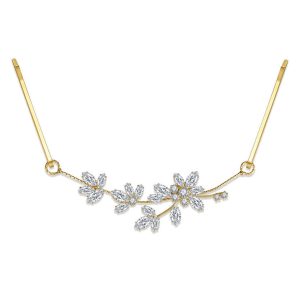
This use-case focus has created clear regional demand splits that wholesale buyers cannot afford to ignore. North American markets, where low-fuss, active lifestyles dominate, show a 62% preference for the lighter, more scratch-resistant 14K gold profile across everyday wear categories from signet rings to curb chains, while MENA and Southern European markets retain a 58% preference for 18K’s richer, warmer gold tone for engagement pieces, holiday gifting and formal occasion wear. Southeast Asian markets, meanwhile, are driving demand for accessible, trend-forward pieces that offer both finish options, as fast fashion cycles shorten to 3-4 weeks per collection. This demand split is reshaping long-held material norms: solid gold is no longer the only vehicle for 14K and 18K aesthetics. Stainless steel jewelry with 14K PVD plating delivers the exact durability, light gold tone and affordable price point aligned with everyday 14K demand, while 925 silver jewelry with 18K gold vermeil plating offers the rich, saturated gold tone and strong hypoallergenic properties of solid 18K at a 70% lower price point, making it ideal for statement and occasion pieces, often accented with precision-cut cubic zirconia for added luxury.
The shift away from one-size-fits-all karat inventory has upended traditional OEM jewelry models, which were built for bulk runs of single-material, single-finish SKUs with 500+ unit minimums. Retailers now seek a jewelry supplier that can deliver consistent color matching across 14K and 18K finishes, across multiple material bases, to build cohesive collections that serve both everyday and occasion shoppers without forcing customers to choose between durability, aesthetic and price. As an SGS/ITS certified China jewelry manufacturer founded in 1990, with 1000+ skilled production workers and decades of professional OEM ODM custom service, our operations have evolved to meet this 2026 demand, with a core portfolio spanning 316L stainless steel, 925 silver and cubic zirconia pieces across both hip-hop and luxury fashion styles. We offer full plating and engraving customization across both 14K and 18K gold tone finishes, low MOQ for custom fashion jewelry test runs, and a stable wholesale supply chain that cuts lead times to 10-14 days even for mixed-finish orders, eliminating the overstock risk that comes with committing to thousands of units of a single karat or material.
As gold prices are projected to rise another 11% by 2027, driven by sustained global economic uncertainty, demand for accessible alternatives that match 14K and 18K aesthetic profiles will grow to capture 58% of the global bridge jewelry market, with solid gold SKUs increasingly reserved for high-end custom bridal and heirloom pieces. For wholesale jewelry buyers, the old strategy of stocking majority 18K solid gold to signal premium quality will lead to excess inventory and lost market share, as younger shoppers opt for durable, wearable pieces that fit their budgets. Instead, buyers should segment inventory by use case: allocate 60% of everyday wear stock to 14K-finish stainless steel pieces targeted at North American and Gen Z shoppers, 30% of occasion stock to 18K-finish silver pieces accented with CZ for MENA, EU and gifting markets, and reserve 10% of budget for solid 14K/18K custom pieces for high-end clients. Leverage low-MOQ custom programs to test emerging fashion trends, from engraved hip-hop pendants to minimalist luxury stackable rings, across both finishes before scaling top-performing SKUs, to reduce risk and align inventory with real-time regional demand.

The biggest takeaway for wholesale partners as we head into 2026 is that karat count is no longer a proxy for quality or desirability—it is a finish choice, tied to specific use cases, regional preferences and consumer lifestyles. By aligning inventory with the concrete tradeoffs consumers are actively researching and partnering with flexible, certified suppliers that can deliver consistent quality across materials and finishes, buyers can capture share in a fragmented, fast-growing market without taking on unnecessary inventory risk.