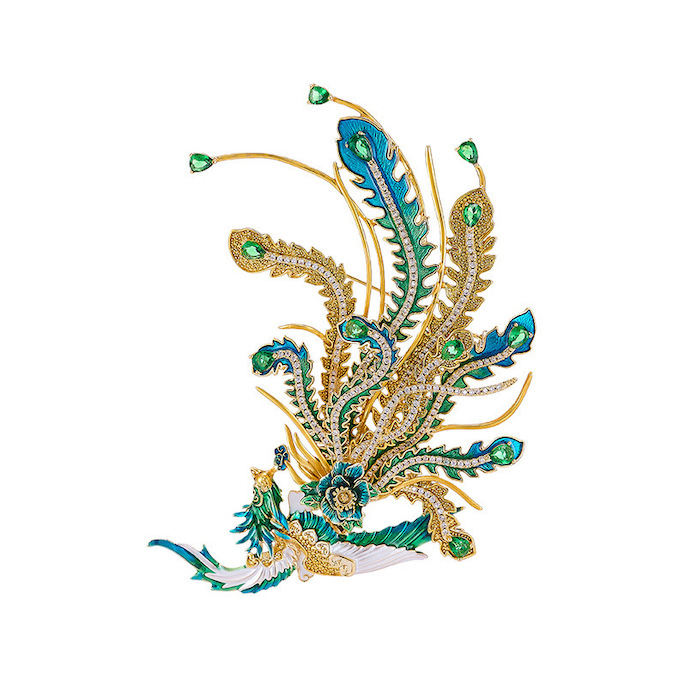
The wave of “more is more” jewelry seen across SS2026-2027 runways from Chanel to Gucci is not a random creative flourish—it is a direct market response to three years of quiet luxury’s stranglehold on consumer taste. Between 2023 and 2025, wholesale jewelry assortments were dominated by thin, unbranded gold bands, tiny stud earrings, and delicate, one-note necklaces designed to signal understated wealth. But as runways from Paris to New York showcased twisted stacks of beaded charms, cascading crystal collars, and oversized sculptural pieces, the message is clear: consumers are done with aesthetic restraint. The “messy” layering trend, which features pieces styled to look like curated pulls from a personal jewelry box rather than perfectly matched sets, first gained traction on TikTok among Gen Z creators tired of the curated, homogeneous “clean girl” aesthetic, before being picked up by major couture houses as a defining direction for SS2027. The trend even encourages layering pieces over tops and outerwear, rather than restricting jewelry to bare skin, opening up new use cases for heavier, more visible statement pieces.
Gen Z, which will make up 42% of global jewelry buyers by 2027 per Euromonitor data, is driving the pivot away from minimalism, prioritizing pieces that enable unscripted self-expression over rigid style rules. This demographic’s preference for personal storytelling is why charm stacks, signet rings, and nature-inspired motifs—from camellia pendants to brutalist butterfly charms and shell accents—are dominating collection lineups, alongside the return of early-2010s inspired long, tactile pendants reworked with brutalist, non-boho finishes. Material preferences are shifting in lockstep: cool-toned silver jewelry is outpacing gold for the first time in six years, aligned with Pantone’s 2026 Cloud Dancer color of the year that favors soft, high-lustre white finishes, pearls, moonstones, and opaque black accents of onyx and enamel. Translucent resin and Lucite pieces, which create the illusion of floating stones, are also gaining traction for their sculptural, playful appeal, particularly among younger shoppers who reject the unwritten rule that metal finishes and styles must match.

The global shift toward maximalist jewelry is not uniform, and wholesale buyers that ignore regional differences risk carrying misaligned inventory. In North American markets, demand leans heavily into hip-hop inspired chunky pieces: thick link chains, oversized chandelier earrings, and stacked signet rings, where tarnish-resistant, accessible 316L stainless steel jewelry is the fastest-growing material category for mid-tier and streetwear retailers. In EU markets, by contrast, consumers are favoring refined organic motifs—long brutalist pendants, wood and shell accents, and smooth sculptural silver cuffs aligned with contemporary luxury aesthetics. Southeast Asian fast fashion markets, meanwhile, are prioritizing candy-colored beaded stacks and translucent cubic zirconia pieces at accessible price points, with shorter trend cycles that require faster inventory turns.

This shift is upending traditional oem jewelry workflows, which were built for large bulk runs of identical minimal pieces. Today’s buyers need flexible orders that mix SKUs, support custom finishes, and allow small test runs of trend-forward designs without locking up working capital. As an SGS/ITS certified China jewelry manufacturer founded in 1990, our 1000+ person production team has spent decades refining professional OEM ODM custom service capabilities across 316L stainless steel, 925 silver, and cubic zirconia jewelry, with design lines spanning both hip-hop and luxury fashion styles. Our low MOQ structure, full range of plating and engraving customization options, and stable wholesale supply chain allow buyers to test trend-forward custom fashion jewelry SKUs without overcommitting capital, even as order complexity rises. Unlike smaller suppliers that have struggled to adapt to mixed-SKU orders, our production lines are calibrated to produce both core staple pieces and limited-run trend designs with consistent lead times.
For buyers navigating these shifting fashion trends, three core strategies will drive success over the next 18 months. First, move beyond selling single pieces to curate mix-and-match stack bundles: group necklaces of varying lengths, ring sets in mixed metal and enamel finishes, and bangle sets that let consumers achieve the “messy” layered look without sourcing individual pieces across vendors. Encourage retail partners to merchandise bold statement earrings alongside basic wardrobe staples like white tees and denim, leaning into the trend’s core styling rule of high contrast to drive impulse purchases. Second, regionalize assortments to match local demand: stock durable stainless steel statement pieces for North American streetwear accounts, refined silver nature-motif pieces for EU boutiques, and colorful translucent CZ pieces for Southeast Asian fast fashion retailers. Third, partner with a proven jewelry supplier that can support flexible customizations, from engraved signet rings to custom plated charm sets, to let retail clients offer personalized pieces that resonate with Gen Z’s desire for self-expression.

Looking ahead, this maximalist, personalization-focused trend is not a short-lived micro-trend: internal forecasts suggest that stackable, customizable pieces will make up 38% of global wholesale jewelry sales by 2028, as consumers continue to reject one-size-fits-all aesthetic rules. Buyers that lock in flexible, reliable supply chains now will be best positioned to capture demand as the trend moves from high-fashion runways to mass market retail over the next 12 months.